


BOOK REVIEW: “Love’s Unseen Enemy” identifies false guilt and the relational habits that prevent authentic connection
Have you ever apologized for something you didn’t actually do just to keep the peace? Perhaps you feel a lingering, gnawing sense of obligation that persists long after a situation has resolved, even when you know you acted with the best intentions. It is a subtle, heavy internal pressure that often goes unnamed, leaving us feeling responsible for the emotions and outcomes of everyone around us. We tend to dismiss these feelings as merely being “conscientious,” but there is a significant difference between a healthy conscience and an emotional trap that keeps us from living freely.
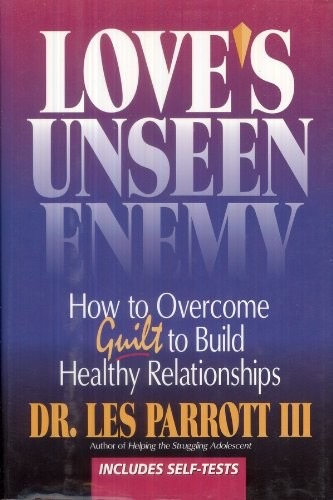 I routinely recommend Dr. Les Parrott, III’s Love’s Unseen Enemy: How to Overcome Guilt to Build Healthy Relationships because it deals directly with the issue of false guilt, a topic few people think about or understand. While we are often taught to examine our actions when we feel bad, this book introduces the crucial, often ignored distinction between true guilt, which signals a genuine moral wrong, and false guilt, which is essentially a trick of the mind.
Parrott explains that this false guilt functions like an emotional phantom, convincing you that you are perpetually falling short even when you have committed no objective error. To cope with this internal pressure, people repeatedly fall into four primary relational styles: pleasers avoid conflict to maintain harmony, controllers use power to manage their environment and mitigate discomfort, withholders pull away to protect themselves from perceived judgment, and lovers strive for authentic, transparent connection. Three of these behaviors create a recurring, destructive pattern where you are constantly forced to adopt one of these defensive roles to satisfy an internal critic that is never appeased.
The danger of these negative persistent patterns is that it makes authentic intimacy impossible. You cannot fully give or receive love when you are trapped in these survival roles, constantly performing or defending against a critic that demands perfection. When you mistake this heavy, misplaced obligation for actual morality, you stay locked in a defensive state, perpetually monitoring every move for the potential of a mistake that has not even occurred.
By learning to identify which of these styles you may occupy, you gain the tools necessary to break out of this limiting routine. Regaining your freedom requires the courage to stop accepting blame that does not belong to you, which in turn allows for a level of transparency and vulnerability that can actually sustain the relationships you want to build. Moving past the unseen enemy of false guilt is a primary way to exchange a life of performance for one of genuine connection.
Scotty
If interested, you can find this book on Amazon by clicking here.


Leave a Reply